CHECK OUT OUR PROMOTIONS HERE


Hesft 14

Hesft 14

PowerGuard® Al 35 kV 133% TR-XLPE CTS PVC Type MV-105, AEIC CS8_Test 14
Toggle Icon

Test 1 duy anh test

Category Link Icon
Toggle Icon

Hieu's Category 2

Category Link Icon
Toggle Icon

Hieu's Category 3

Category Link Icon
Toggle Icon

Hanh Test CWC 3_Update

Category Link Icon
Toggle Icon

Test 3.1

Category Link Icon
Toggle Icon

Hanh Test CWC 5_Update

Category Link Icon
Toggle Icon

Test 5.1

Category Link Icon
Toggle Icon

Hanh Test CWC 7 lan 36

Category Link Icon
Toggle Icon

Hanh Test 7.1

Category Link Icon
  • PowerGuard® cables are intended for use in wet or dry locations for distribution of single or three phase medium-voltage power. These cables may be installed in ducts, exposed to sunlight or direct buried. Sizes 1/0 AWG and larger are approved for use in cable tray, marked “FOR CT USE”.
Hesft 14
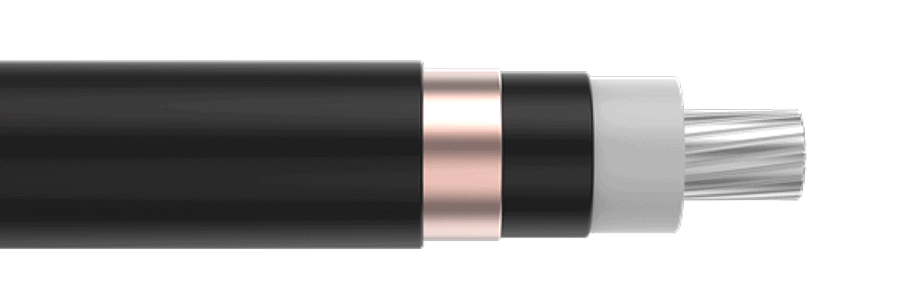
  • Single conductor cable with filled strand aluminum conductors, true-triple extrusion, dry cured insulation system consisting of a thermosetting semiconducting conductor shield, high dielectric strength tree-retardant cross-linked polyethylene (TR-XLPE) insulation, thermosetting semiconducting insulation shield, flat copper tape, black polyvinyl chloride (PVC) jacket.
  • Conductor:
  • Compact concentric stranded aluminum alloy 1350. Stranded conductors are water-blocked with conductor filling compound.
  • Conductor Shield:
  • Extruded thermosetting semiconducting cross-linked polyethylene (XLPE) shield which is free stripping from the conductor and bonded to the insulation.
  • Insulation:
  • Extruded, Tree-Retardant Cross-linked Polyethylene (TR-XLPE) - 133% insulation level.
  • Insulation Shield:
  • Extruded thermosetting semiconducting cross-linked polyethylene (XLPE) shield with controlled adhesion to the insulation providing the required balance between electrical integrity and ease of stripping.
  • Metallic Shield:
  • Flat, uncoated 5 mil thick copper tape helically applied with a minimum 25% overlap.
  • Outer jacket:
  • A polyvinyl chloride (PVC) jacket is extruded over the copper tape shield, meeting the physical requirements of Table 1, when tested by the methods specified in ICEA S-97-682. The jacket shall be free-stripping and not interfere with the contact between the flat copper tape and the underlying extruded insulation shield. The jacket is sunlight resistant and marked. The jacket shall contain a print legend marking, sequential length (meter or feet) marking and three longitudinal extruded red stripes.
Hesft 14
Table 1
Physical Properties of PVC Jacket
Unaged Tensile Strength, minimum (PSI) 1500
Aged* Tensile Strength, minimum retention (%) 85
Unaged Elongated, minimum (%) 100
Aged* Elongated, minimum retention (%) 60
Heat Distortion 1 hr at 121 ºC, maximum (%) 50

*Aged for 120 hrs at 100 ºC

Temperature Rating
Insulated Conductor and Copper Tape Shield Temperature Ratings
Normal:105 ºC
Emergency*:140 ºC
Short-Circuit – Insulated Conductor:250 ºC
Short-Circuit – Copper Tape Shield:200 ºC

*Operation at the emergency overload temperature shall not exceed 1500 hours cumulative during the lifetime of the cable.

Standards
ASTM B400 – Compact Round Concentric-Lay-Stranded Aluminum 1350 Conductors
ICEA S-97-682 – Utility Shielded Power Cables Rated 5 Through 46 kV
ICEA T-31-610 – Test Method for Conducting Longitudinal Water Penetration Resistance Tests on Blocked Conductors
ICEA T-34-664 – Test Method for Conducting Longitudinal Water Penetration Resistance Tests on Longitudinal Water Blocked Cables
ICEA P-45-482 – Short Circuit Performance of Metallic Shields and Sheaths on Insulated Cable
AEIC CS8 – Extruded Dielectric, Shielded Power Cables Rated 5 Through 46 kV
UL 1072 – Medium-Voltage Power Cables
  • UL listed as Type MV-105 – File E476447
Country
USA

12-Jul-21

Image
MV AL XLPE CTS
Notes:
  1. Dimensions and weights are subject to standard manufacturing tolerances and are subject to change without notice.
  2. Cables are manufactured, tested and marked to meet or exceed the requirements in ICEA S-97-682 for copper tape shielded cables rated 5-46 kV and the latest revision of AEIC CS8.
  3. Utilizing a 105 ºC normal operating conductor temperature will increase cable ampacity rating but will reduce the cable fault capability. If the user plans on operating these cables at 105 ºC conductor temperature for normal operation and 140ºC for emergency overload, please contact American Wire Group for the applicable cable ampacity and shield fault capability ratings.
  4. Migration of soil moisture away from the cable is more likely at the higher operating conductor temperature and can result in an increase in soil thermal resistivity, resulting in an increase in conductor and soil temperature.